Third-Generation Cimbalom
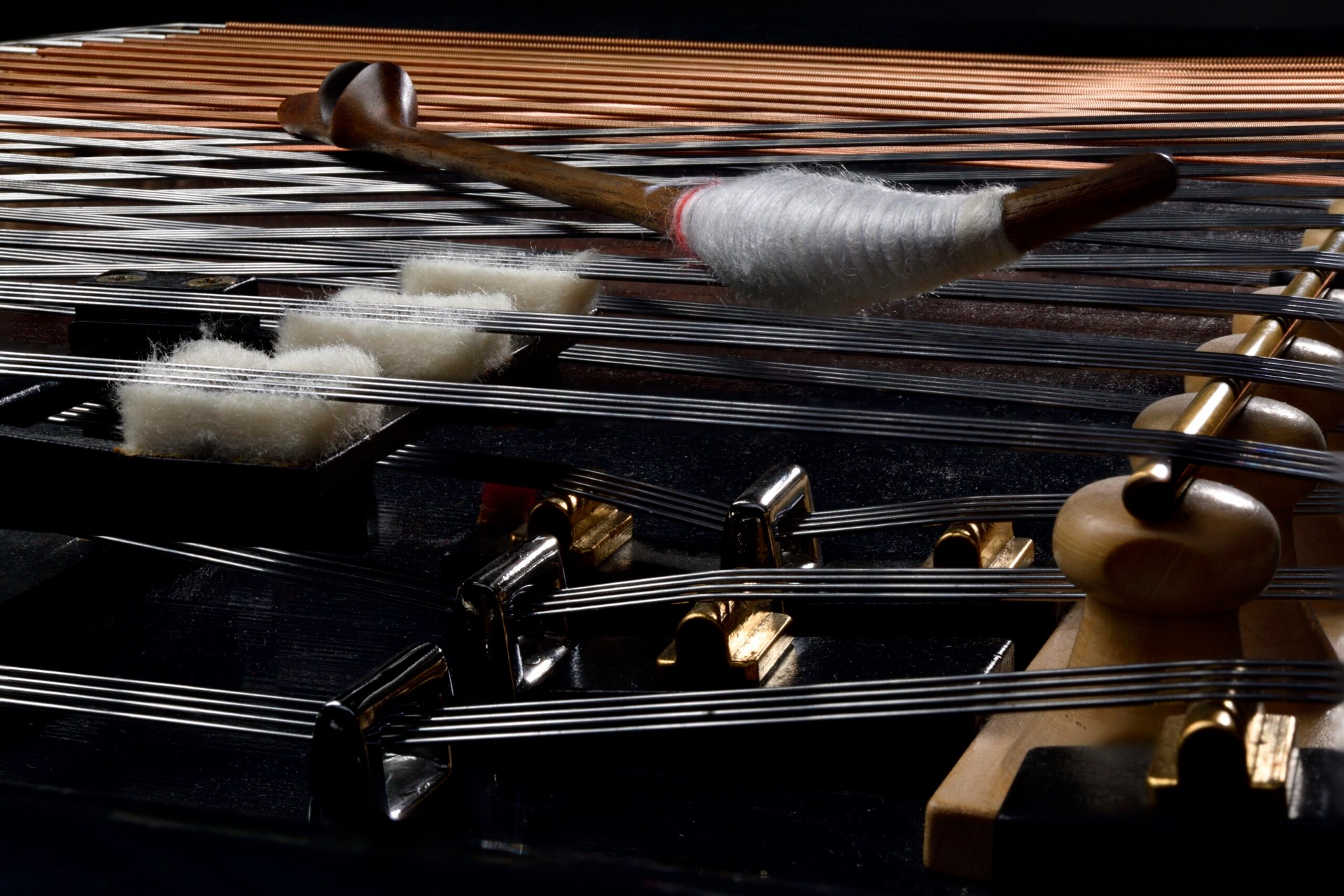
Daniel Skála's cimbalom, crafted by HOLAK, is the first in a series of unique concert instruments that we refer to, with a touch of exaggeration, as "third-generation cimbaloms."
Its uniqueness lies in its significant structural modifications and redesigned appearance. This one-of-a-kind instrument is the result of fifteen years of intensive dialogue between an active performer and a master instrument maker. The instrument was built by Vladimír Holiš in his HOLAK workshop, with significant contributions from his collaborators Jiří Krpec and Jan Pustka, in November 2012.
Cimbalom: HOLAK • Painting: Tomáš Volkmer • Photo: Barbora Myšáková
What makes this instrument unique?
A slightly modified arrangement of the sound posts in HOLAK instruments ensures greater evenness across the entire range. Extending the strings in the middle register of the cimbalom eliminates the problem of insufficient string tension (approximately half that of concert grand pianos). The specific and highly considered choice of string gauges ensures smoother tonal transitions between the instrument's different registers than ever before. Extending the instrument's range in the bass register down to the contra A has contributed to achieving a more seamless tonal connection within the bass register.
Daniel Skála also initiated the development of a fundamentally redesigned pedal system, which had previously been one of the weakest aspects of the cimbalom's construction. This instrument now features full-range damping, including in the highest register. The unique damping system for the upper strings was developed by Jan Pustka, and its advantage is that it can be applied to any other cimbalom of this type. The shape of the pedal lyre and the attachment of the pedal mechanism are also entirely new. The use of the highest-quality resonant wood available goes without saying.
▼ Listen to the Akademie programme on Czech Radio Vltava's website.▼
